What we hold to,
and why it matters.
Quality control is not a final step added after production. It is a system of checks, decisions, and follow-up that supports consistency from materials to finished product.
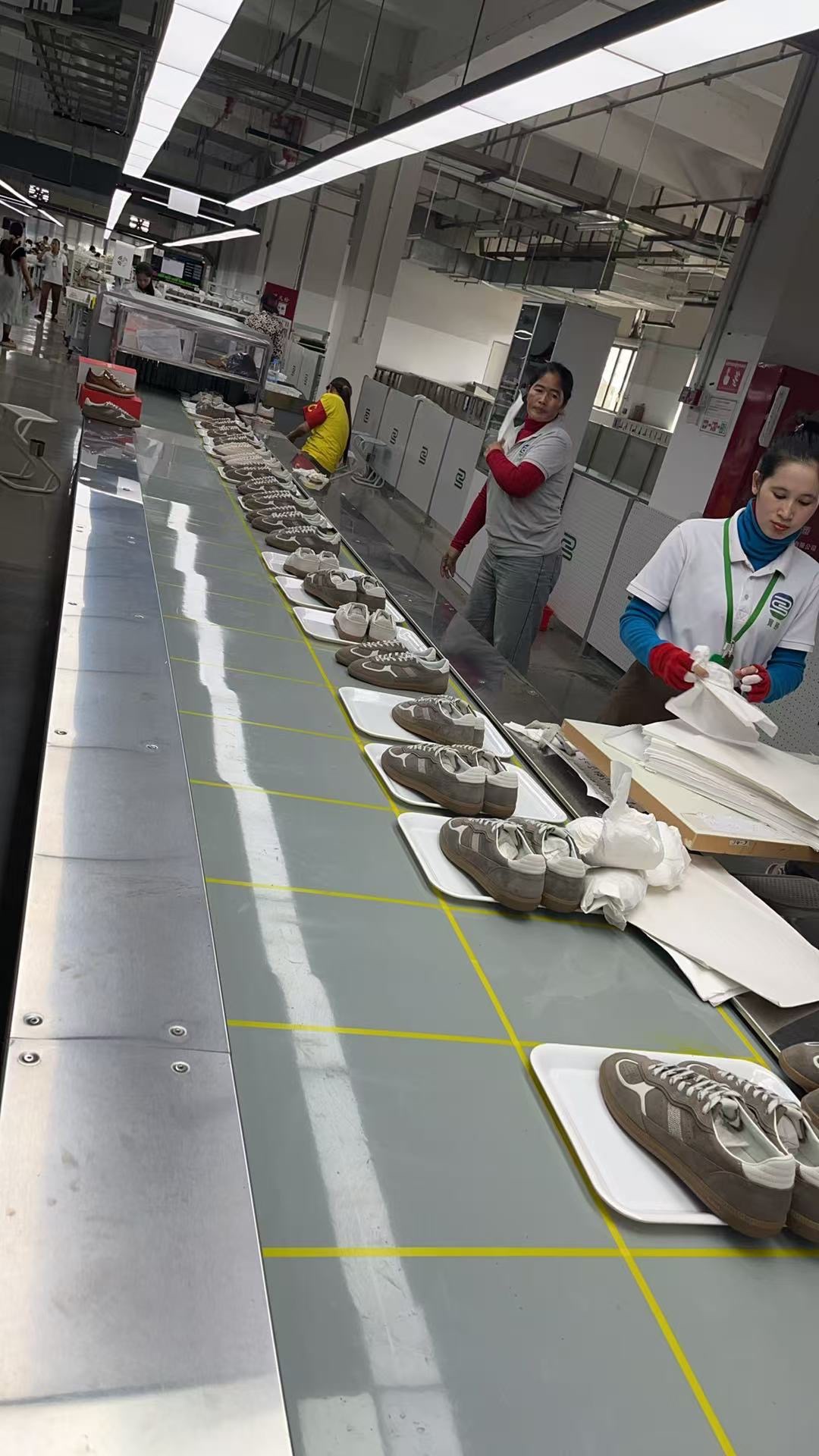
Quality is not a
final inspection.
In footwear, small inconsistencies can change appearance, comfort, and customer trust more than people expect. That is why quality must be approached as an active process, not as a passive inspection stage.
We pay attention to material consistency, construction accuracy, finishing details, labeling, and the repeatability of product standards across production runs. The goal is not only to find visible mistakes, but to reduce avoidable variation before it grows.
"Quality is the result of decisions made well before the final pair is finished."
The specific things
we pay attention to.
We follow quality at multiple stages — not only at the end of production. The checks below cover the key points where issues are most likely to appear and where they can still be corrected effectively.
When materials arrive, we check color consistency, texture, thickness, and alignment with the approved specification. Materials that deviate from standard are flagged before cutting begins, preventing issues from entering the production flow.
Cut pieces are checked against the approved pattern for shape, size, and grain direction. Accurate cutting is the foundation of consistent assembly — deviations at this stage affect every pair downstream.
During assembly, we monitor thread tension, stitch density, seam alignment, and structural integrity. Stitching issues are easier to address early and harder to correct after the shoe is lasted.
The lasted upper is checked against the approved shape before the outsole is attached. This is one of the last stages where shape corrections can be made without affecting the completed shoe, so it receives careful attention.
Outsole bond strength is tested and verified as part of the assembly process. Pairs with insufficient adhesion are identified before final inspection and corrected or rejected before shipment.
Finished pairs are inspected for surface quality, edge finishing, hardware placement, lining condition, and insole positioning. Any detail that a buyer or end consumer would notice is assessed against the approved standard.
We verify size accuracy across the size run by measuring key dimensions against the approved last specification. Sizing drift — where dimensions gradually shift during production — is identified and corrected before it becomes a production-wide issue.
Left and right pairs are checked for color consistency, height, shape, and material grain direction. Pairs that do not match within acceptable tolerance are pulled and reviewed before they reach packing.
Before packing, we verify tissue, dust bags, labeling accuracy, and size marks. Pair counts are confirmed against the production order, and any discrepancy is resolved before shipment documentation is issued.
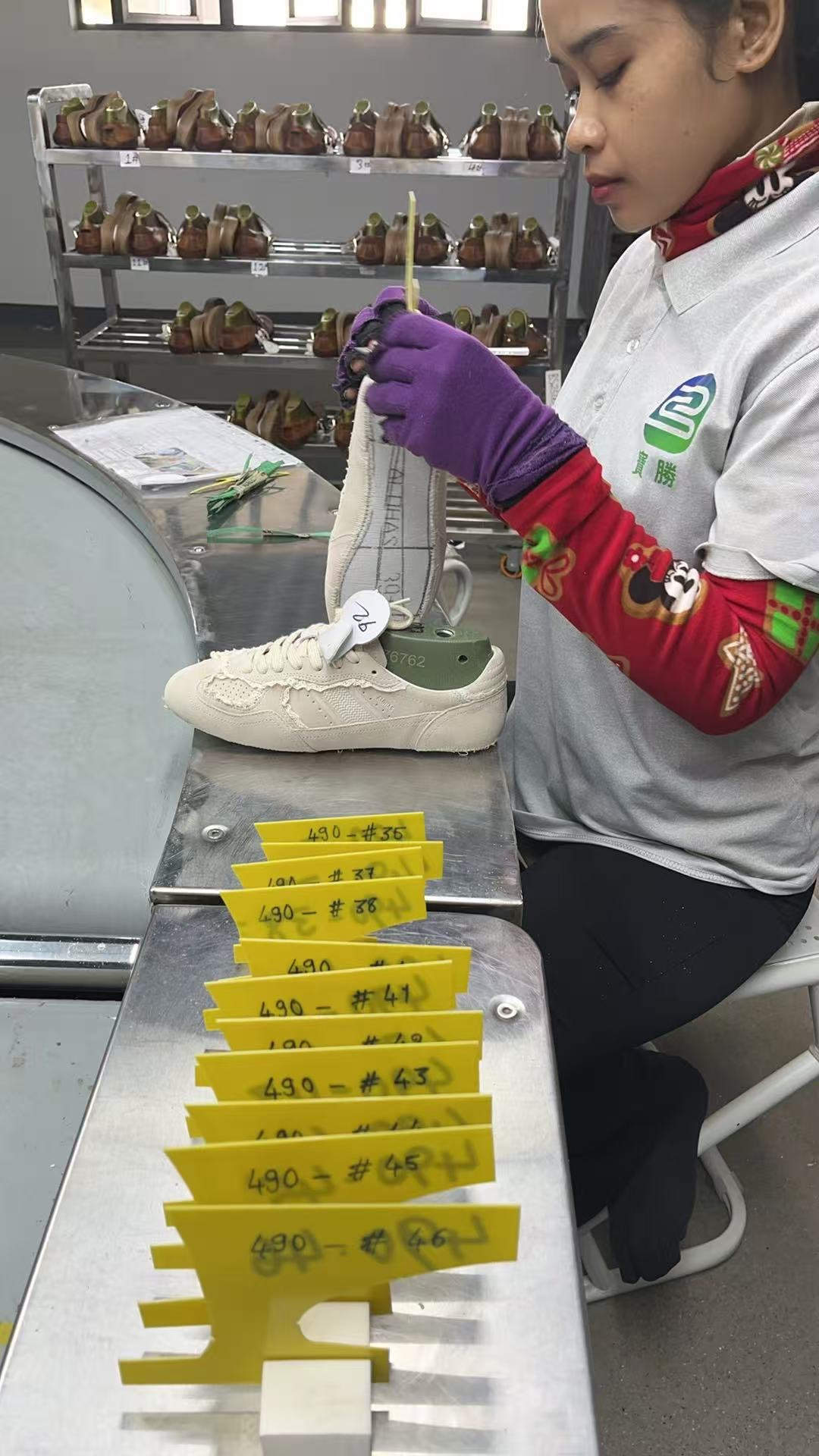
The details buyers
don't always see — until they do.
Small finishing inconsistencies — a misaligned edge, an uneven stitch line, a slightly off-grain material cut — may seem minor at the sample stage. Across a production run, these small variations add up and affect the consistency buyers expect when they receive delivery.
For buyers, product consistency connects directly to customer confidence and repeat purchase. A shoe that holds up across the season, looks right in pair, and finishes cleanly reflects on the buyer's brand as much as on ours. That is the practical reason we attend to details that can feel minor in isolation.
- Edge finishing quality — affects appearance and durability over time
- Lining alignment and condition — directly impacts wearing comfort
- Material grain and surface consistency — visible in pair comparison and in-store display
The approved sample
is the standard.
For buyers and distributors, consistency is what supports confidence in repeat orders. A product that looks right once is not enough. It must be made with a level of control that can be trusted again.
Where variation does occur — in materials, in production conditions, or in component availability — we identify it as early as possible, assess its impact, and communicate it to the buyer before proceeding rather than absorbing it silently.
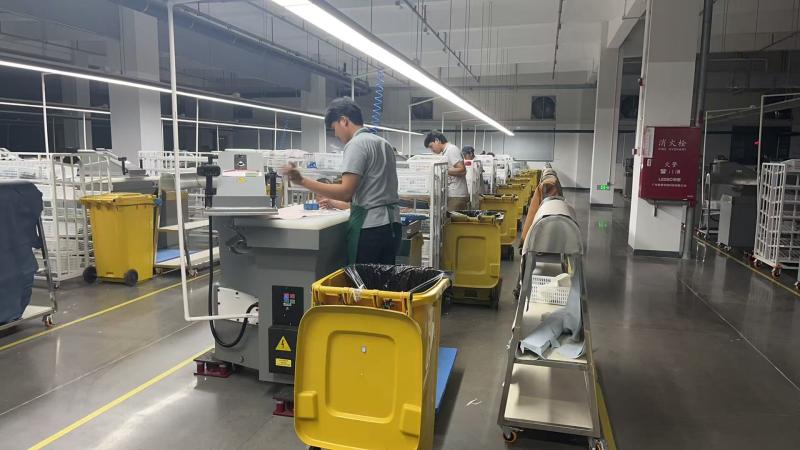
The approved sample is retained as a physical reference throughout the production run. It is used at preproduction confirmation, inline spot checks, and final inspection to ensure the production output remains consistent with the standard the buyer approved.
Before bulk production begins, a preproduction check confirms that materials match the approved sample and that any buyer-noted corrections have been correctly applied. Production does not proceed until this check is completed and aligned.
During production, output is periodically compared against the reference sample. This allows us to catch gradual drift in construction, color, or finishing before it affects a significant portion of the run.
When a deviation is identified, we assess its severity and determine whether it can be corrected within the current production or requires a buyer decision. Deviations that affect product quality or consistency are communicated directly and without delay.
When things
don't go as planned.
Not every production run is without issue. When quality problems are identified — whether during production or after delivery — we respond with a clear, honest assessment rather than avoidance.
If a buyer raises a quality concern, we ask for documentation, assess the issue against the production reference, and respond with a practical position. Our aim is to resolve genuine issues fairly and apply what we learn to the next production.
When a buyer raises a quality report, we review the documentation and respond with a direct assessment. We need clear information — images, pair count, specific details — to respond accurately and fairly.
We investigate quality issues to understand where they originated — material, process, or communication. The purpose is not only to resolve the current issue but to reduce the likelihood of the same issue occurring in a future production.
We build cooperation with buyers who intend to work with us over multiple seasons. Handling quality issues honestly, even when it is uncomfortable, is the only practical basis for a relationship that is worth maintaining over time.
Quality starts
with the right conversation.
Quality control works best when both sides are aligned on the standard from the beginning. If you have specific requirements — materials, construction tolerances, finishing details — tell us upfront. It shapes how we approach your production from the start.